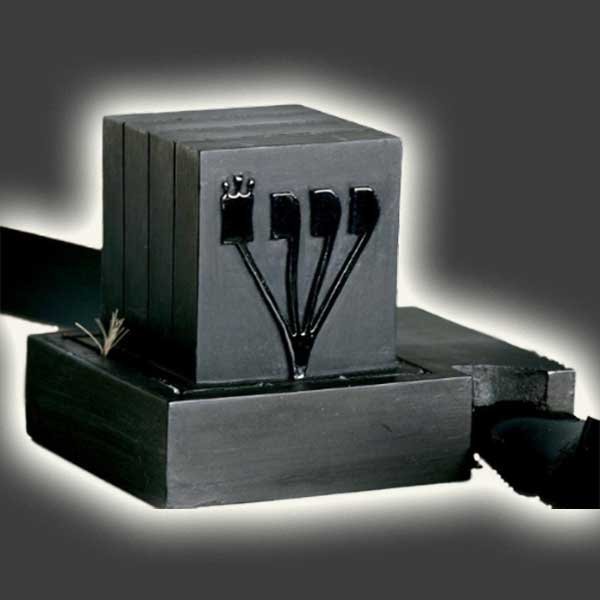
What are the different types of Tefilin cases? (Gassot, Ribua Regel, Mekhouvanot)
When you buy Tefilin, you often hear about ‘Gassot’, ‘Mekhouvanot’ or ‘Ribua Regel’ cases. But what do these terms really mean? What are the halakhic and practical differences between these types of cases? This article guides you step by step to better understand the making of Tefilin cases and to choose the pair that suits you.
What are Tefilin cases?
The Tefilin cases (called ‘batim’ in Hebrew) are made from kosher cattle hide, tanned לשמה (lishma) — that is, the tanner must have explicitly intended the hide for making Tefilin. This intention is a sine qua non condition for the validity of the Tefilin.
There are several criteria that distinguish the cases from one another: the manufacturing method (manual or mechanical), the quality of the separation of the compartments, and the presence or absence of external ridges. These criteria define the categories of cases that we will detail.
1. Gassot Tefilin: thick leather cases
The term ‘Gassot’ (גַּסּוֹת) literally means ‘thick’ in Hebrew. Gassot cases are made from a single piece of thick cattle hide (beef or cow), giving them exceptional sturdiness and durability.
Unlike Dakot cases (thin), Gassot are made without assembly or gluing of several parts — the entire case comes from a single piece of hide. This is considered a higher quality (hidur mitzvah) by most halachic authorities.
Gassot are the most common and recommended cases for someone who wants to invest in a beautiful pair of Tefilin that will last a lifetime. Their maintenance is also easier.
2. Rov Proudot and Mekhouvanot Tefilins: the quality of compartment separation
Regardless of leather thickness, a second essential criterion concerns the quality of the separation of the four compartments located on the upper part of the head-tefillin case (Chel Roch). The Torah requires these four compartments to be perfectly distinct.
The Rov Proudot Tefilins
In cases called ‘Rov Proudot’, the four compartments are separated in the majority (but not completely) along their height. Many manufacturers apply glue between these compartments to reinforce the structure of the case. However, this use of glue raises an important halakhic issue: if the glue or a manufacturing defect prevents full separation, the compartments may be considered as forming only one.
Sofrout.com and Tefilines.com do not offer this type of case.
The Proudot Male (or Proudot Legamré) Tefilins
In the ‘Proudot Legamré’ cases, the four compartments are completely and totally separated down to their base, fully meeting Jewish law requirements. This is the standard quality reference for cases.
⚠️ Important: never check for space between compartments with a knife or sharp object, as this could damage them. Special devices are used in specialized workshops for this verification.
In these cases, an internal nerve (called ‘guid’ in Hebrew) runs through the compartments inside the structure, which already represents a sophistication (hidur) compared to Rov Proudot cases.
The Mekhouvanot Tefilins: manufacturing excellence
In the so-called ‘Mekhouvanot’ (מְכוּוָּנוֹת) cases, an external nerve visible to the naked eye runs through the case between the compartments of the head-tefillin. This external guide adds to the internal guide already present in Proudot cases, thus providing an additional level of sophistication (hidur).
Manufacturers tend to reserve their best leathers and greatest craftsmanship for this particular type of case, because those who seek them generally have a desire for perfection in fulfilling the mitzva. Mekhouvanot cases are thus the highest-end in the Proudot category.
3. Ribua Regel Tefilins: certified manual manufacturing
Jewish law has been transmitted to us by Moses (Mose Rabbanou) teaching us that the cases of Tefilin must be perfectly square — this concerns the base (Titoura), the upper part (Ktitsa) and the seam (Tfira).
Three methods are used to shape the cases:
• Ribua Mekhona (מְכוֹנָה): manufacturing with an electric machine.
• Ribua Regel (רֶגֶל): manufacturing with a non-electric lathe, whose motion is generated manually by the seller’s feet.
• Ribua Yad (יַד): manufacturing with a lathe whose motion is generated by another person’s feet.
The question of the validity of mechanical manufacturing has been long debated by the authorities. If the majority consider machine manufacturing valid (kosher), they still advise, for strictness (hidur), to prefer Tefilin made manually — i.e., in Ribua Regel or Ribua Yad.
The Rambam writes in Hilchot Tefilin 3:16 that “only a Jew can manufacture Tefilin, for their manufacture is like their writing.” Thus, human action in the manufacturing process is fundamental.
Comparison table of case types
| Type | Compartment separation | External guide | Manufacturing | Quality level |
|---|---|---|---|---|
| Rov Proudot | Partial | No | Machine | Standard |
| Proudot Legamré | Total | No | Machine or manual | Good |
| Mekhouvanot | Total | Yes (visible) | Machine recommended | Excellent |
| Gassot Ribua Regel | Total | Yes (depending on model) | Manual (foot) | Premium |
Which ones to choose?
For a first purchase or daily use, Gassot Proudot Legamré Tefilins represent an excellent quality/durability ratio. For those who want to fulfill the mitzva of Tefilin with maximum rigor (hidur mitzvah), the Gassot Mekhouvanot Ribua Regel cases are the ideal choice.
👉 Discover our category of Gassot Tefilins available in our shop.
→ See all our Gassot Tefilins in the shop
FAQ — Frequently asked questions about Tefilin cases
What is the difference between Gassot and Dakot?
Gassot are made from a single thick piece of hide from a large livestock (beef). Dakot are thinner cases made of several layers of leather assembled. Gassot are generally more robust and durable.
Are Mekhouvanot Tefilins mandatory?
No, Mekhouvanot are not mandatory — they constitute an additional level of hidur (embellishment of the mitzva). Tefilins Proudot Legamré are already fully valid and of good quality.
What exactly is Ribua Regel?
Ribua Regel designates a manual shaping method for cases, performed with a non-electric lathe operated by the buyer’s feet. This method is preferred for halachic strictness, as it ensures that the manufacturing is entirely done by a Jewish human being with the required intention.
Why is the guid (nerve) important?
The guid is a natural nerve used to reinforce the structure of the compartments. In Proudot cases it is internal. In Mekhouvanot, it is also visible on the outside. Its presence is a sign of quality and sophistication in the manufacture.
Are the Tefilins offered on Tefilines.com of Gassot quality?
Yes, all Tefilins available on Tefilines.com are Gassot cases, made from thick cattle hide and certified by a Rav. Check our shop to discover our different models.